
The Right to Freedom of Peaceful Assembly (FOPA)
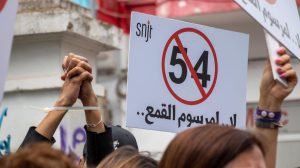
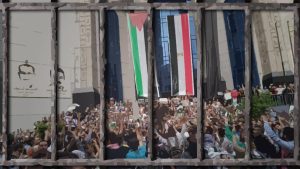
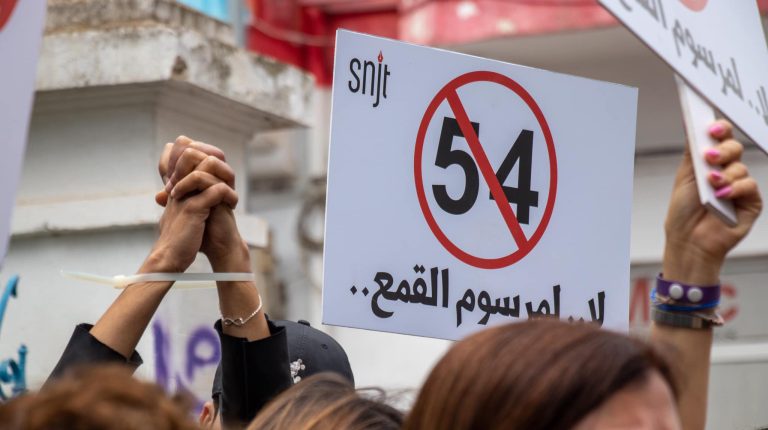
The cornerstone of individual expression is exercising rights such as the right to freedom of peaceful assembly (FOPA), a fundamental human right essential for the functioning of democratic societies and a prerequisite for the exercise of other human rights. FOPA enables participation in public discourse and serves as a means to advocate for change and accountability.
This right is inherent to all individuals. It is a responsibility imposed on governments to protect and enable, even when the assembly or protest challenges the state or public policies – provided that they remain peaceful – rather than forcing unwarranted or disproportionate restrictions.
The Lebanese Context
Lebanon has witnessed events since at least 2019, and these have had major economic, social, and political repercussions, with severe consequences affecting many citizens. In many instances, this has led to mass protests denouncing difficult living conditions and the government’s poor management.
Since 2019, the Lebanese Pound has experienced a drastic depreciation, losing nearly 98% of its value. According to the Lebanese Central Administration of Statistics, the country’s annual inflation rate decreased from 192.3% in December 2023 to 177.3% in January 2023.
As of 2022, the unemployment rate has increased from 11.4% in 2018-2019 to 29.6%. In that same year, it has been estimated that approximately 80% of Lebanese residents live in poverty, with 36% falling below the extreme poverty line. Moreover, around 90% of Syrian refugees residing in Lebanon struggle to meet their basic needs.
All these ongoing challenges present a daily violation of the fundamental rights of individuals, including their entitlement to employment and their right to an adequate standard of living. Moreover, without the guarantee of exercising the rights to FOPA and Freedom of Expression (FOE), citizens are deprived of essential means to voice their concerns and express their opinions, advocating for change and pushing for accountability.
The Right to FOPA in Lebanon
The Lebanese legal system protects the right to FOPA, a fundamental right guaranteed by the Lebanese Constitution, International Law, and National Laws.
Lebanese Constitution and International Law
Lebanon is a Parliamentary Democratic Republic based on respect for public liberties, including the freedom of opinion and belief and the equality of rights and duties among all citizens without discrimination.
The constitution itself doesn’t explicitly guarantee the right to FOPA. However, Lebanon’s commitment to the Charter of the United Nations and the Universal Declaration of Human Rights (UDHR) is expressly stipulated in the preamble to the Constitution, as it includes in paragraph B that Lebanon commits to the UDHR and other related international covenants and agreements, which, per the Constitutional Council (Lebanese constitutional court) its provisions are part of the Lebanese constitution and have constitutional value.
According to the Lebanese Constitution itself, exercising the right to FOPA is related to the nature of the right to FOE, as guaranteed in Article 13: “The freedom to express one’s opinion orally or in writing, the freedom of press, the freedom of assembly, and the freedom of association shall be guaranteed within the limits established by Law.”
Additionally, the UDHR clearly states in Article 20 the right to FOPA:
“1. Everyone has the right to freedom of peaceful assembly and association.
- No one may be compelled to an association”.
Moreover, the International Covenant on Civil and Political Rights (ICCPR) – which Lebanon ratified in 1972 – provides further protection for this right, as guaranteed by Article 21, which includes the right to organize and participate in protests and demonstrations. As long as the assemblies are performed peacefully, they should be protected according to Article 22, this doesn’t imply that an assembly may be limited only because it is inconvenient to someone. However, this doesn’t imply that exercising this right is absolute, as restrictions may be permissible if provided by law, deemed absolutely necessary, or aimed at protecting other rights, with an obligation for the State to do so without basing it on discrimination solely on the ground of race, color, sex, language, religion or social origin.
Domestic Laws
The national legal framework of the right to FOPA is governed by different legislations that include, but are not limited to:
- The Ottoman Law of 1911; Public Assemblies Law
- Lebanese Penal Law of 1943
- Lebanese Labour Law of 1946
- Legislative Directive No. 112/1959; Public Employees Regime
- The decision of the Minister of Interior and Municipalities No. 1024, dated March 29, 2006, Determines the mechanism of notification to demonstration, assembly, and sit-in.
It is important to note that Decision No.1024/2006, that was made to organize the notification mechanism of assemblies, undermines the origins of the Right to Peaceful Assembly, evident through Article 1, that shows interference of the government and violates the constitutional guarantee by only stating that Lebanese citizens can file in this ‘application’.
Additionally, this decision is being exploited as an application for permitting an assembly rather than just a means for notification, which is a clear violation of the Lebanese Constitution and international standards.
Exercising the Right to FOPA in Lebanon: Protecting Protesters
Legal Mandates: Ensuring Protection for Protesters in Peaceful Assemblies
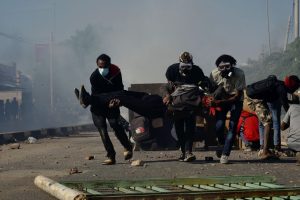
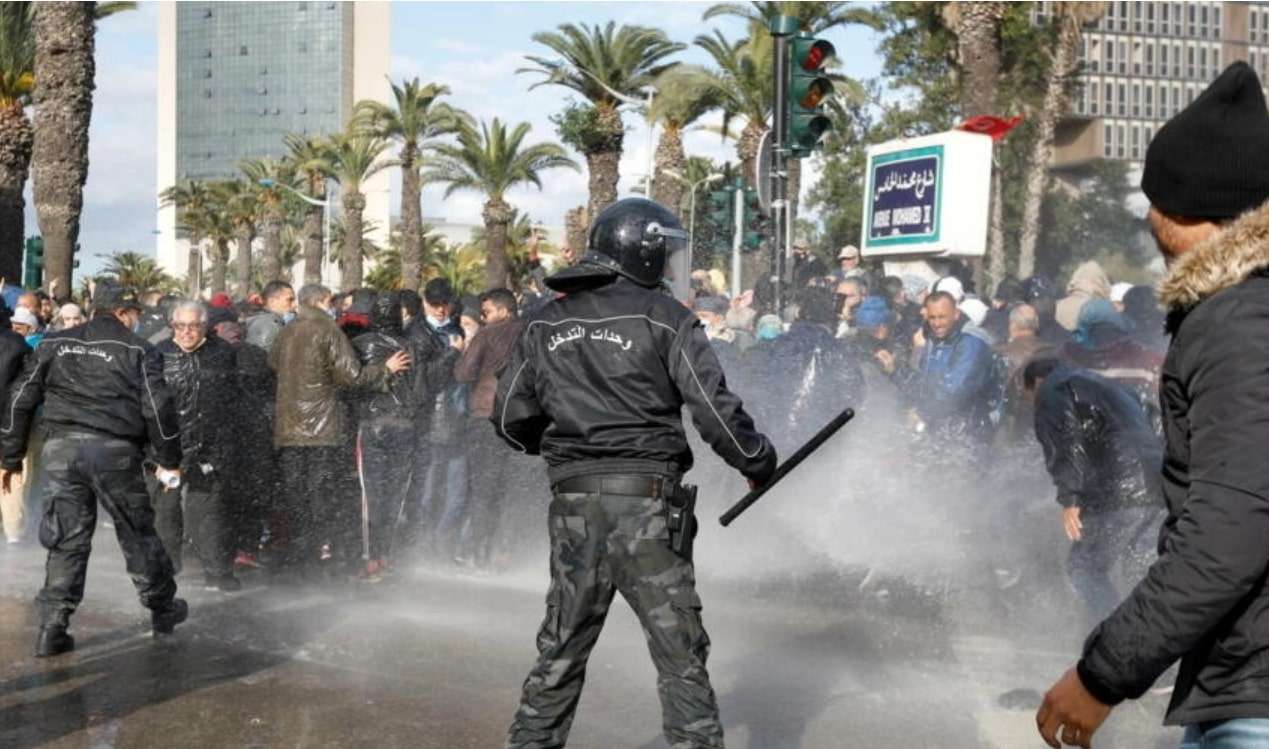
In recent years, amidst a backdrop of political upheaval and social unrest in Lebanon, exercising the right to FOPA has become increasingly significant, yet suppressing dissenting voices hasn’t been an unusual occurrence, may it be by enabling public authorities to assert their dominance and physically assault protesters in public. As an example, in January 2022, the Internal Security Forces (ISF) allegedly resorted to using force to scatter demonstrations that escalated into violence due to the swiftly worsening economic situations in Tripoli, in response, they deployed tear gas, rubber bullets, and live ammunition against protesters, resulting in injuries to hundreds and the death of one protester.
In theory – and under international law – the state and its respective authorities are obligated to take all feasible measures to ensure the protection of peaceful protesters. Whereas, in practice, authorities in Lebanon frequently fail to fulfill this obligation. Instead, they often resort to using force to disperse peaceful assemblies or neglect implementing the necessary safety measures to protect peaceful protesters. Knowing that the Organization of the Internal Security Forces Law and the Internal Security Code of Conduct, states that Lebanese Law Enforcement officials have an obligation to actively protect peaceful assemblies from others aiming to disperse the assembly or inflict harm on the protesters, nor should these law enforcement officials abuse their power upon the protesters to break up their gathering.
Failure to Protect: The Freedom March of September 30, 2023
Most recently, an assembly labeled as the ‘Freedom March‘, that took place on September 30th 2023, organized by a group of 30 associations, political groups, and media organizations, aimed to voice concerns against escalating repression of basic rights and freedoms. The organizers had notified the authorities of the protest in accordance with Article 3 of the Public Assemblies Law. During the sit-in, the ISF, along with the anti-riot police, was present.
During the assembly, a group of individuals instigated violent confrontations, causing physical harm to several protesters and journalists, some of whom required medical attention and hospitalization. Shockingly, these attacks – that went on for three hours – occurred despite the presence of the ISF and anti-riot police, who evidently did not take adequate steps to ensure the safety of the march participants, it was up until the army intervened to assist in evacuating the protesters. Furthermore, it was discovered that the perpetrators had premeditated this attack as they openly discussed their plan to disrupt the march on social media prior to the event, yet authorities failed to intervene and prevent the violence from occurring in the first place.\
In light of recent events and ongoing challenges surrounding the exercise of the right to FOPA in Lebanon, and despite legal mandates and international obligations requiring authorities to safeguard peaceful demonstrators, there remains to be a significant gap between theory and practice. Authorities frequently resort to disproportionate force or neglect necessary safety measures, as evidenced by the failure to prevent violence during the Freedom March of September 30, 2023, which underscores the urgent need for reform and action.