

Participating in various protests, particularly within Tripoli and the surrounding area, had become second nature throughout the Lebanese uprising to Derik, a young man living a couple of buildings across from the famous Al Nour Square. Derik remarks that the close proximity between his home and the center of protests in Tripoli automatically implied his participation in them, “it was not really my choice whether to take part in the rallies or not, my presence in that area conceived my instinctive participation.” He joined demonstrations as a cry for help, and as a form of defiance against the daily infringements on people’s innate rights, which he believes include many outrageous violations against human dignity, life, liberty and property, freedom of thought and expression, equal opportunity, social order, and multiple others.
“I have suffered from the effects of insomnia for multiple years now, so I often take walks late at night to clear my head and tire my body, in hopes of coming back and finding sleep”
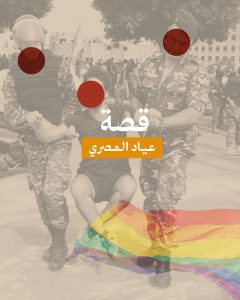
“I have suffered from the effects of insomnia for multiple years now, so I often take walks late at night to clear my head and tire my body, in hopes of coming back and finding sleep”, Derik explains why he decided to go for a walk close to dawn, on the night of April 27, 2020. “It was the aftermath of the day where the whole strip of banks in Tripoli were burnt,” he explains and adds that the only people to be seen in the square were firefighters and security officers. Protests had been terminated by security forces throughout the early evening, and no civilians were to be seen at this point. Derik mentions walking along the Al Nour Square in his pajamas at around 4 am, examining the destruction left by demonstrations and altercations, when he happened to pass a large military vehicle with a couple of accompanying soldiers standing around it. They directed insults and other types of verbal harassment at him, which he reports as degrading; “They were saying things like, wow look at his legs! Let’s have some fun with him since he’s alone!” Derik expresses, “identifying as a member of the LGBT community, I felt specifically threatened.” He was unsure of what might take place, due to a valid potential that the soldiers might use his identity as an excuse to terrorize him and his human rights. In hopes of evading a perceived violation against him, Derik put his head down and continued to walk past the soldiers without looking back or being able to identify the officers’ identities.
“They were saying things like, wow look at his legs! Let’s have some fun with him since he’s alone!”
Derik recognizes and laments the various atrocities against his human integrity; however he feels lucky that no further infringements were committed against him that night. Yet, he argues, “with zero doubt, I believe this was a direct violation of my rights! And specifically, my right to safety and security, humane treatment, expression, and dignity!”
The cruel behaviors expressed by members of the security force against civilians does not surprise him. In Derik’s perspective, the obvious lack of accountability mechanisms clears the path for many similar arrays of harassment by members of the security forces; this applies directly to his experience with human rights abuses. “This has led to the normalization of violently targeting civilians.” Derik answers that even though this is a highly prevalent issue, it is clearly not the desired type of behavior. Personally, he never had any violent intentions, nor did he ever carry any type of weapon. He utilized peaceful forms of protest to demand the Lebanon he has always longed for, which he describes as “a country that is free from the entire political class and provides chances to people equally and fairly.”
Derik’s belief regarding the safety of LGBT members participating in protests in Lebanon is mainly dependent on the specific region where demonstrations are being held, he says, “I truly believe that the intensity of aggressions and violations towards us is higher due to social beliefs and biases, but some areas, including Beirut, are more welcoming of diversity and differences.” Despite the numerous dangers facing him and others, specifically members of the LGBT and other vulnerable communities, Derik insists on not wanting to allow them to affect his enthusiasm for protesting. However, he agrees that his and other people’s energy in addition to their hope, has been diminished by violent oppression and fear, as well as the compacted crisis; “the effects of the amounts of physical damage and mental abuse inflicted on people are not to be taken lightly, especially when we take into consideration that all these cruel behaviors were coming from the state entities which exist to protect us.”
Ultimately, Derik was forced to leave the country in search of financial and social stability; he mentions job opportunities and financial well-being as the largest factors pushing him to leave the country. Now, it has been almost 4 months since he moved to and started a job in Qatar, but he still hopes to one day return to a changed Lebanon.