

“I never had knowledge of someone specifically organizing protests, I joined demonstrations to express my anger with the current situation and leading class.”
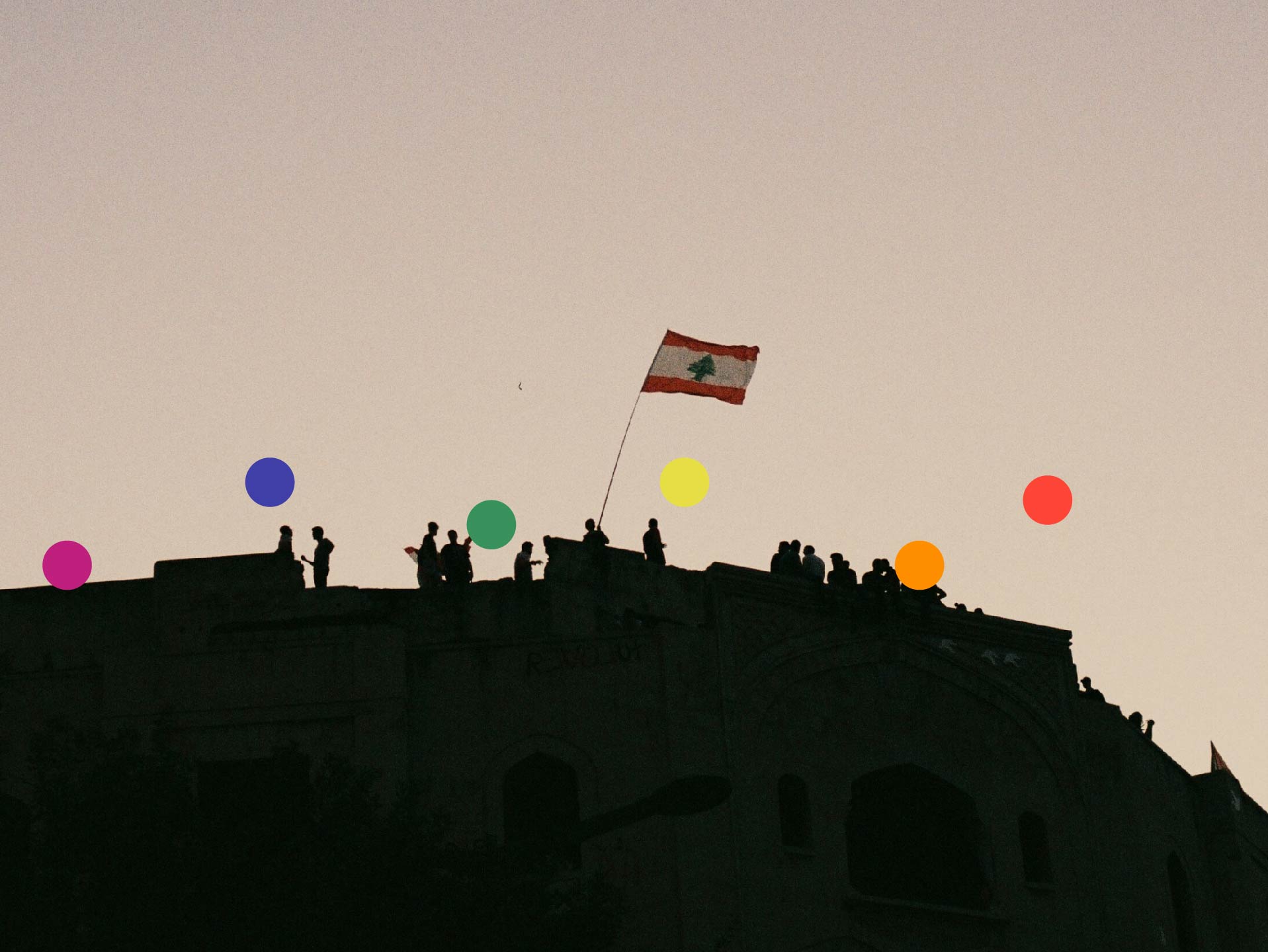
Lara is a young woman – abstaining from having her real name and identity documented – who recently left Beirut in pursuit of a life of dignity, which in her eyes is not possible within Lebanon. She participated in several protests during the Lebanese uprising, all of which she joined out of anger and a need to assemble, to express her demands and dissatisfaction. The variety of protests she was involved in were usually on a reactionary basis and not specifically organized by one entity, Lara explains, “I never had knowledge of someone specifically organizing protests, I joined demonstrations to express my anger with the current situation and leading class.” The demands that Lara had brought forth during demonstrations were centered around a non-sectarian Lebanon, where people have access to basic rights and services; she shares her vision for her dream Lebanon where everyone is free, “I wish for a country where people are respected for who they are and can express whatever they want; a country with no corruption, but with trust and competent officials.”
“They were yelling at us, insulting us, ordering us to leave the area. Many other people and I were shoved by our arms and forcibly moved out of the by members of the security force,”
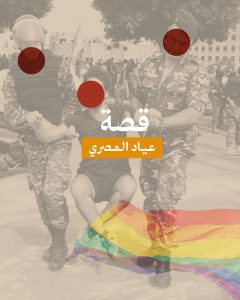
At a protest in downtown Beirut, shortly after the resignation of the Lebanese prime minister Saad Al Hariri and his government on October 30, 2019, Lara was present and marching among the crowd towards the blocked entryways of Nejmeh Square. She portrays the scene as something close to a horror film, “the violence I was seeing around me was frightening; many of the demonstrators were being physically assaulted and taken by security forces.” Joined by her sister Lea, they paraded with the swarm of civilian demonstrators, chanting slogans between the main entrance to Nejmeh Square and the Al Nahar building. The square was filled with tear gas smoke filling Lara’s eyes with a burning sensation. “At several points both my sister and I found it very difficult to breathe and even see in front of us due to the amount of smoke!” Lara explains that as she was gasping for breath, she heard multiple gunshots, followed by seeing a large unit of security personnel charging at her and the demonstrators. “They were yelling at us, insulting us, ordering us to leave the area. Many other people and I were shoved by our arms and forcibly moved out of the by members of the security force,” Lara expresses the fear for safety she felt as she was struggling and stumbling to evade further contact with security personnel, mainly members of the Lebanese Internal Security Forces and the parliamentary security force.
Security forces blocked off alleyways and streets, aiming to create one common exit from the initial starting point of the protest near the Al Nahar building. Lara, her sister, and others were chased through the street of Gemmayze, while security personnel also shot countless rounds of teargas to disperse all civilians. Lara describes the scene, “it looked like a huge white cloud had just landed on Gemmayze. When we got to our car, both Lea and I were having a hard time breathing and seeing clearly from all the toxins we were forced to inhale! The side effects I was experiencing during my breathing over the next several days were very worrying.” Lara firmly suggests that the forms of aggression shown by security personnel on that day, as well as on others, was something obviously common; she suggests that our social upbringing often encourages displays of aggressive behaviors. With that in mind, she understands why some civilians in protests would resort to methods of aggressive demonstration, but she suggests that there is always a better way to communicate discontent and demands without having to utilize force.
“I don’t think the streets in Lebanon are safe to protest for anyone”
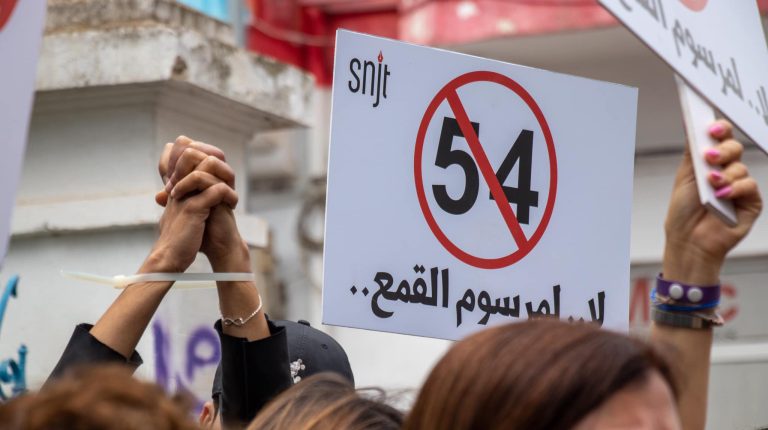
“I don’t think the streets in Lebanon are safe to protest for anyone period,” she continues to address the issues of safety in within protests, “however as I identify with both, being female and part of the LGBT community, I understand that there are differences in the potential occurrence and intensity of human rights violations in each case.” She asserts that it is important to make a distinction between women and members of the LGBT community in this regard. Specifically for queer individuals, the presence of a law that directly criminalizes their existence must be taken into strong account. Lara conveys that this matter is critical, “the fact that a law like this even exists, and that it can be legally used against us any time, is in itself an unimaginable danger.”
Lara displays knowledge of having multiple of her natural rights inflicted, including her rights to assemble peacefully, express her opinion, and live with safety and free from cruel treatment. She believes that the state’s recurring oppressive and violent displays were a major force behind both, her decision to stop protesting as well as her decision to leave Lebanon. Lara explains the rationality of her decision, “when you see your friends and people suffering numerous violations to their rights, and you experience the same thing happening to you, it makes you less enthusiastic to continue participating in protests, or to even continue living here.” She also emphasizes how her and hundreds, if not thousands, of other people have suffered different types of psychological impact, mostly feelings of hopelessness and demotivation. Lara is adamant about not wanting to ‘get over’ her past experiences, until foundational change in Lebanon is achieved. “The only thing that would make me feel better, or at least the first step to feeling better, is the change which we started our fight for.”