

“I dream of having our basic rights such as water, electricity, jobs, democratic and fair elections. Then, after having those things, we can build from there.”
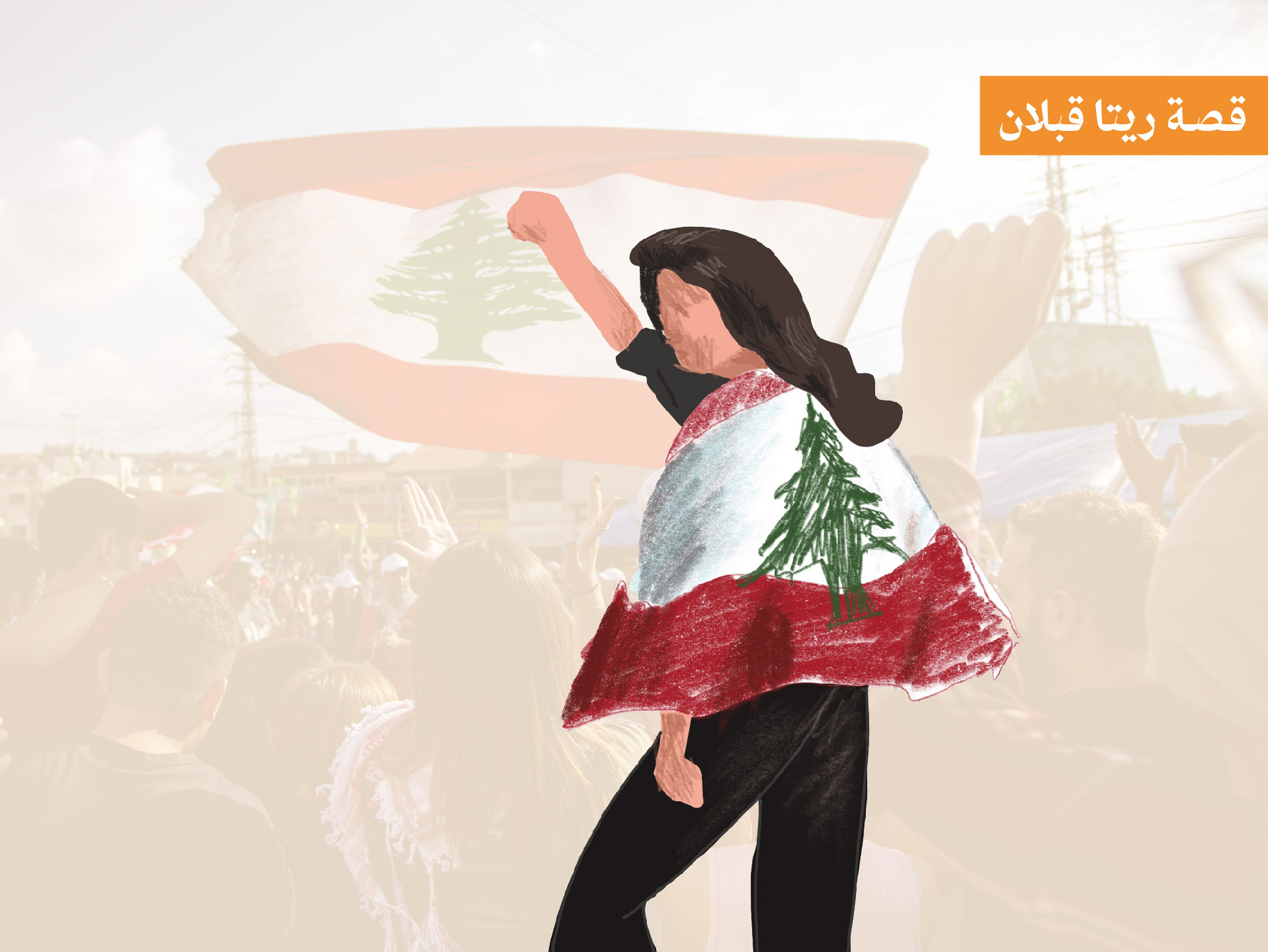
Rita Kabalan is a young photojournalist who took part in several protests during the Lebanese uprising, which emerged in October of 2019. Even though she has her political beliefs and stances on oppression and injustice in Lebanon, she asserts her involvement in various demonstrations as a reporter; “when I am at a protest, I am there to report the truth, as an act of protest.” Rita reports numerous instances in which she was verbally, as well as physically, harassed and assaulted by security staff.
On August 8, 2020, she took part in the demonstration four days after the horrific Beirut port explosion, for which she had noticed lots of media traffic from various pages and individuals. Rita joined the protest to document the potential violations against civilians, in hopes of her work contributing to a change. Similar to all demonstrations at which she was present, she never carried any type of harmful attitude or weapon, only her camera. Rita realized the intensity of that protest right away as she walked up towards the Fouad Chehab bridge from Gemmayze, witnessing demonstrators being chased by members of the army and internal security forces all around. Rita reached what she considered a safer option to being alone, a stretch across the main road filled with hundreds of protestors; many of them were throwing bottles at the still standing security officers. Rita explains what pushed her to record a video, “it was around 9 PM, I remember it had already gotten dark. I usually take photos and don’t record many videos but everything I had been seeing that day made me want to capture the intensity and reality of it all, so I turned my video recording on at that point.”
“I was in such physical shock that I wasn’t able to get myself up or even move at all, let alone breathe correctly.”
Within minutes, security personnel rushed at and attacked Rita and the other demonstrators. As partly documented in the video she had fortunately recorded, Rita attempted to run away from the charging army guards when one of them caught up from behind her and thrusted the butt of his rifle into her left upper back with force. She immediately slammed onto the ground, where she laid in shock and unable to move. Rita was barely able to catch her breath; she expressed, “I remember the first thing I noticed was my equipment falling to the floor with me and the filters breaking,” she says, “I was in such physical shock that I wasn’t able to get myself up or even move at all, let alone breathe correctly.” Rita suddenly saw another rifle plunge in front of her face, but she was surprised to know it was another officer who had bent down to lift her up off the ground. At that moment, an older man unacquainted with Rita appeared to offer his assistance to her, which was allowed by the mindful security officer. “I fell unconscious right after he carried me and sat me on a chair on the sidewalk;” she woke up to screams and chaos around her. Security personnel were attacking protestors again, including the man who had helped her. Still barely able to move, Rita attempted to get up but fell unconscious again. When she was conscious again, there was a young man offering to take her to a hospital.
“My collar bone was broken, but I had so much anger in me that the first thing I wanted to do was get better to be able to join the next protest and document the truth,”
Rita reports having suffered injuries that had lasting effects for a long time. Rita has knowledge of the numerous violations against her inherent human rights, including the right to protection against inhumane treatment, the right to security, and the right to peacefully assemble. She noted the violations against herself as well as the ones against hundreds of other people, which she believes are not unusual occurrences in the Lebanese context. However, rather than focusing on the actions of the individual members of the security forces, she points out the inherently oppressive nature of the military as an entity oppressing even its own soldiers.
Rita does not know the identity of the specific violator who attacked her on the 8th of August, although she does have a pixelated snapshot of his face on her camera. Even though she does not think that having proof would lead anywhere due to the lack of accountability, she was surprised that officers were careless about her camera content at the time of the assault. She still questions how she got away with the material, “I would have expected the officer to grab my camera and make me delete everything after the assault. But it was like they knew they could get away with anything, so they did not even bother to clean out my video footage.”
Rita has participated in countless other protests ever since she was exposed to the past violation on August 8th, but she asserts that demonstrations in Lebanon are very dangerous, especially for disadvantaged communities including women. “I do not think the streets in Lebanon are safe for women and members of the LGBT community to protest. There might not be a multitude of violence against women in these situations, but the types and numbers of harassment are frightening and do not provide any sense of security,” she also presumes that many men take part in rallies mainly to harass women.
During her participation as a reporter and conveyer of truth throughout the uprising, Rita always dreamt that Lebanon would make the first step towards equal human rights for everyone. Today, she longs for and expresses the same; Rita affirms, “I dream of having our basic rights such as water, electricity, jobs, democratic and fair elections. Then, after having those things, we can build from there.”